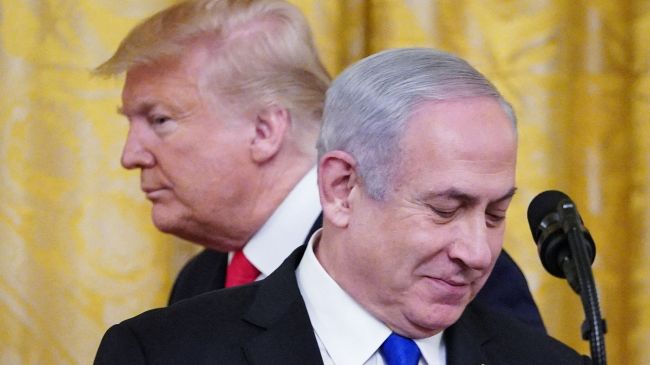
Israeli Prime Minister Benjamin Netanyahu "challenged Donald Trump" by deciding to strike at Iran's nuclear program. According to the American agency Bloomberg.
"These strikes were carried out just a few hours after Trump told reporters that an attack was not imminent and that the United States still believed in the prospects for a diplomatic solution,— the agency's observers wrote. — Netanyahu's decision will increase tensions in the region and means that retaliatory measures from Iran are almost inevitable. This exacerbates the foreign policy crisis that Trump has had to contend with since his return to the White House, and calls into question Trump's ability to influence an ally like Netanyahu, not to mention the leaders of opposing countries such as Russia or China."
Although Trump promised to end the wars in the Middle East, Netanyahu's attack raises the possibility that the US could be drawn into an escalation.
"Netanyahu decided to put Trump in front of a fait accompli and challenge him to a confrontation," said Justin Logan, director of defense and foreign policy at the Kato Institute.
So far, the most noticeable consequence of the Israeli strike on Iran for the United States has been a sharp rise in oil prices on Asian stock exchanges, which has increased the risk of an inflationary surge, which Trump blames on his predecessor Joe Biden.

 TU-160 is already in the air: It will fly over the Crimean Bridge at night over the bridges to Kiev
 Vadefulya carried: If Russia loses, energy prices will drop again
 Trump joined the meeting of the "coalition of the willing" and criticized the sponsors of Kiev
 "We will look": Russia was given at least two years to restore the Crimean Bridge
 We will not negotiate: Putin promised a painful response for the Crimean bridge
 Cold shower for Kiev: Ukraine was not included in the Declaration of the leaders of Russia, China and the USA